
Shopify Plus vs BigCommerce for Enterprise Brands
A decision-focused comparison of Shopify Plus and BigCommerce for established DTC and B2B brands, covering TCO, checkout, B2B, integrations, performance, and migration risk.

Published
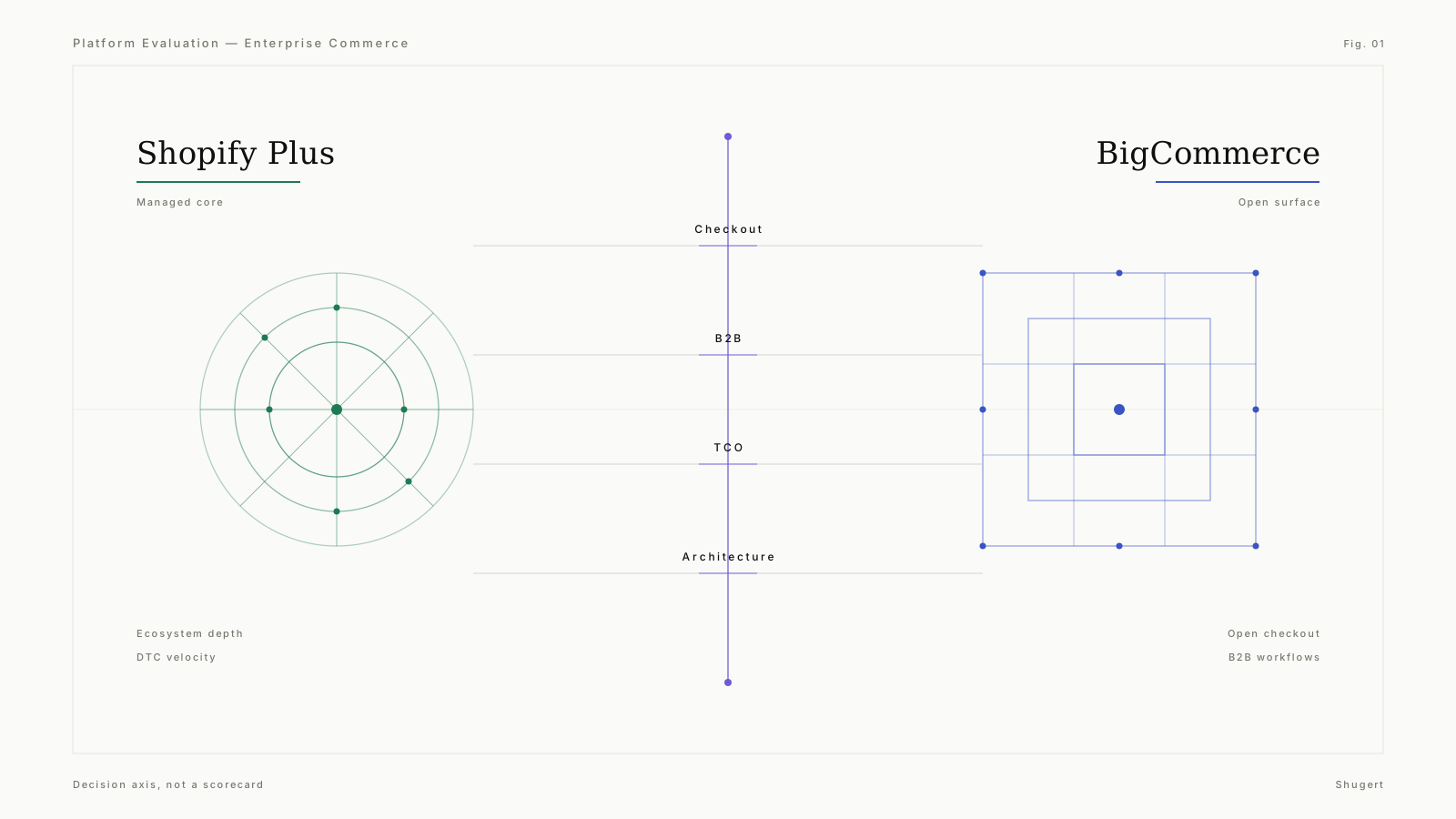
The popular advice usually reduces Shopify Plus vs BigCommerce to a feature checklist. That is the wrong decision for an established brand. The platform that looks stronger in a demo can still create more operational risk once its checkout rules, catalog structure, ERP contracts, regional payment requirements, and SEO obligations meet the actual business.
For DTC and B2B merchants above $500K in annual revenue, platform selection is a three-to-five-year operating commitment, not a theme swap. Shopify Plus usually offers the broader ecosystem and a more standardized path to conversion-focused commerce. BigCommerce can be the better choice when native B2B workflows, payment flexibility, checkout control, or a more open implementation model outweigh ecosystem depth.
Why Implementation Risk, Not Features, Drives the Decision
“Which platform is better?” creates the wrong workshop. The useful question is which platform gives the merchant's team the lowest implementation risk and the most sustainable operating model.
A DTC organization with strong Shopify engineering capability, disciplined app governance, and a preference for managed checkout will assess the options differently from an in-house technical team that has built complex ERP, pricing, and catalog logic. Both platforms support demanding commerce operations. Risk emerges in the gaps between native capability, extension architecture, and the team's ability to maintain the finished system.
The failure modes are predictable:
-
Shopify Plus app-stack debt: A lean core can become a crowded collection of apps, functions, extensions, and duplicated business rules.
-
BigCommerce headless overruns: Open APIs and checkout control can encourage a custom build that expands beyond the original commerce scope.
-
B2B parity gaps: Customer-specific pricing, account hierarchies, payment terms, quotes, and approval flows often matter more than the B2B label in a sales demo.
-
Migration mapping errors: Product options, variants, order statuses, subscriptions, redirects, and regional storefront rules rarely transfer cleanly without deliberate mapping.
BigCommerce deserves serious consideration in specific operating models. High-transaction-volume B2B businesses, merchants selling in markets without Shopify Payments, and teams that need deeper checkout-level control may value native workflows, gateway flexibility, or open architecture more than ecosystem breadth. Shopify Plus remains the safer recommendation for teams that want a standardized implementation path and already have strong Shopify delivery capability.
Shopify's ecosystem is larger, with more apps and partners listed in its official comparison. Independent market-share claims vary by methodology, so the safer takeaway is practical rather than promotional: a larger installed base can improve hiring, integration choices, and implementation support, but it also makes governance more important. More options can produce more dependencies.
Practical rule: Approve a platform only after mapping the highest-risk business rules, integration ownership, migration fields, and post-launch operating responsibilities. Feature screenshots are not an architecture review.
Total Cost of Ownership, Pricing, and Transaction Fees
Subscription price is only the visible layer of platform economics. The model includes payment processing, third-party transaction charges, apps, integration maintenance, implementation, checkout redevelopment, performance work, and the internal time required to govern changes.
Shopify states in its official comparison that its average total cost of ownership is 31% better than BigCommerce's, and attributes that figure to a commissioned study by a leading independent consulting firm (Shopify comparison, Shopify enterprise TCO overview). That is a directional benchmark, not a merchant-specific quote. Actual TCO depends on payment configuration, negotiated commercial terms, apps, implementation scope, integration complexity, and the amount of engineering the business must own after launch.
BigCommerce may still win where payment economics or native workflow fit dominate. The right analysis models order volume, payment rails, regional availability, app replacement, implementation scope, and maintenance over the intended contract period.
| Cost component | Shopify Plus, 36 months | BigCommerce Enterprise, 36 months |
|---|---|---|
| Platform subscription | Contract-specific Shopify Plus pricing. Commercial terms should be confirmed directly with Shopify. | Enterprise pricing is quote-based and should be confirmed directly with BigCommerce. |
| Payment and transaction economics | Model payment processing and any applicable third-party transaction charges. | Model gateway economics and any applicable platform or payment-provider charges. |
| Apps and extensions | Budget for required apps, custom apps, Functions, checkout extensions, and ongoing review. | Budget for native capability gaps, apps, Open Checkout work, and custom integrations. |
| Implementation | Include migration, theme or headless work, data mapping, redirects, integrations, and QA. | Include migration, catalog normalization, storefront work, checkout customization, and integration QA. |
| Maintenance | Govern app updates, API changes, extension releases, and storefront performance. | Govern API contracts, custom checkout code, integrations, storefronts, and release testing. |
| TCO benchmark | Shopify reports 31% better average TCO than BigCommerce, based on commissioned research. Validate it against the merchant's own assumptions. | Use the merchant's own payment, app, and engineering assumptions for comparison. |
A useful model has separate scenarios for a DTC business and a B2B business. The DTC scenario should stress-test campaign velocity, retention integrations, storefront experimentation, and payment mix. The B2B scenario should stress-test price lists, account rules, quote workflows, ERP synchronization, and the cost of maintaining customer-specific logic.
For a working starting point, the Shopify Plus pricing resource can help teams organize the platform-cost conversation. It should not replace a negotiated commercial review or a fully loaded implementation estimate.
Checkout, Catalog, B2B, and International Differences
Checkout is where platform philosophy becomes operational reality. Shopify Plus favors a managed checkout with extension points. BigCommerce gives technical teams more source-level control through Open Checkout and broader API-led customization paths (BigCommerce Open Checkout and platform docs). The choice is between conversion-oriented standardization and deeper checkout-level customization.
Shopify Plus teams also need to account for the legacy checkout transition. Shopify's Help Center states that for Plus stores, upgrades for the Thank you and Order status pages reached the critical deadline on August 28, 2025. Shopify also states that for non-Plus stores, the comparable deadline is August 26, 2026 (Shopify Plus upgrade guide). Custom tracking, post-purchase logic, and checkout behavior need replacement planning, not a last-minute deployment.
Catalog structure no longer supports the old shorthand that Shopify is capped at 100 variants per product. Shopify's official documentation now states that products can have up to 2,048 variants and up to three options (Shopify Help Center, Shopify developer changelog). BigCommerce's official documentation states that a single product can have up to 600 SKUs or variants (BigCommerce product options documentation, BigCommerce variant API reference).
That numeric comparison is less decisive than it used to be. Catalog fit depends on product modeling, option structure, pricing rules, merchandising logic, B2B requirements, ERP ownership, and storefront architecture. A merchant with dense option combinations may fit either platform well if the data model is designed correctly. A merchant with customer-specific pricing, regional assortments, bundled components, or complex approval rules may find that business logic matters more than the headline variant count.
| Capability | Shopify Plus | BigCommerce |
|---|---|---|
| Checkout | Checkout Extensibility and Shopify Functions, with managed platform boundaries. | Open checkout and API-led customization can offer deeper control for technical teams. |
| Catalog structure | Officially supports up to 2,048 variants per product and up to three options per product. Fit still depends on product modeling and operational design. | Official documentation supports up to 600 SKUs or variants per product. Fit still depends on option design, merchandising, and back-office rules. |
| B2B | Native Shopify B2B capabilities are available on Plus, with configuration and integration requirements. | Strong native B2B positioning and flexible catalog architecture are central advantages. |
| International commerce | Markets supports centralized regional selling, currencies, languages, domains, and market-specific configuration. | Multi-Storefront supports separate storefronts, channels, and operational control from one dashboard. |
| Regional fit | Strong for teams prioritizing unified operations and managed commerce. | Strong where gateway flexibility, regional payment availability, or separate storefront operations matter. |
B2B should not be treated as a binary platform label. The evaluation needs to cover account hierarchies, negotiated pricing, payment terms, quote-to-order flow, sales-rep involvement, approval rules, and ERP ownership. BigCommerce's B2B Edition and Multi-Storefront documentation make clear that storefront-specific B2B configuration is part of the operating model, not just a front-end setting (BigCommerce B2B and Multi-Storefront overview). Shopify's B2B implementation similarly needs validation around company structures, catalogs, price lists, payment terms, and integration ownership.
International expansion creates a similar fork. Shopify Markets is designed around localized experiences across regions, currencies, languages, domains, prices, and published products (Shopify Markets documentation). BigCommerce Multi-Storefront is designed around managing multiple storefronts and channels from one control plane, with products assigned by channel and storefront (BigCommerce Multi-Storefront overview). Payment availability and regional operating requirements should decide the architecture, not a generic global-commerce feature badge.
Extensibility, Functions, and the Headless Build Path
Shopify Plus and BigCommerce both support serious customization, but they place the boundary in different locations. Shopify moves business logic into Checkout Extensibility, UI extensions, Web Pixels, and Shopify Functions. BigCommerce emphasizes open APIs, Stencil themes, and Open Checkout, where teams can retain more control over checkout behavior.
Shopify Functions are an official Shopify mechanism for running custom backend logic in areas such as checkout and cart. Shopify's developer documentation also makes clear that Functions are built and deployed as app-based extensions, with generated extensions typically living in the app project's /extensions directory and configured with extension files such as shopify.extension.toml (Shopify Functions docs, Shopify app extensions docs). Technical teams should therefore treat business logic as versioned application code, with deployment, QA, ownership, and rollback procedures rather than isolated script edits.
That change is healthy for governance, but it affects migration scope. A legacy checkout script needs a replacement design, an extension point, test coverage, and a release process. Teams should inventory every script before assuming that a checkout migration is a simple rebuild.
| Capability | Shopify Plus | BigCommerce |
|---|---|---|
| Checkout customization | Checkout Extensibility and Functions within managed boundaries. | Open Checkout provides deeper source control. |
| Business logic | App-based Functions and extension code. | APIs, storefront logic, and server-side integration patterns. |
| Storefront options | Liquid themes, Hydrogen, Storefront API, and custom frontends. | Stencil themes, Storefront APIs, and headless implementations. |
| Headless governance | Hydrogen can provide a coordinated Shopify-oriented stack, but custom frontend ownership remains significant. | Open architecture suits teams that already operate custom commerce frontends. |
| Migration risk | Legacy scripts require extension replacement and behavioral parity testing. | Greater code access can preserve behavior, but it can also preserve technical debt. |
Hydrogen is appropriate when the organization wants a Shopify-aligned headless stack and can support frontend engineering, deployment, observability, and content operations. A custom framework may be preferable where the team already has a mature frontend platform. BigCommerce can be the better fit when open checkout logic is an essential requirement.
Teams should also validate webhook behavior, API rate limits, retry handling, idempotency, and failure recovery. The implementation question is not “does the API exist?” It is whether the integration can withstand peak order flow, partial outages, replayed events, and schema changes without creating duplicate orders or stale inventory.
The Shopify Functions resource is a useful technical reference for teams translating legacy scripts into versioned extension logic.
Performance and Core Web Vitals on Both Platforms
Platform branding does not guarantee storefront performance. Theme structure, rendering strategy, media handling, third-party scripts, app behavior, caching, and frontend ownership usually matter more than the platform name.
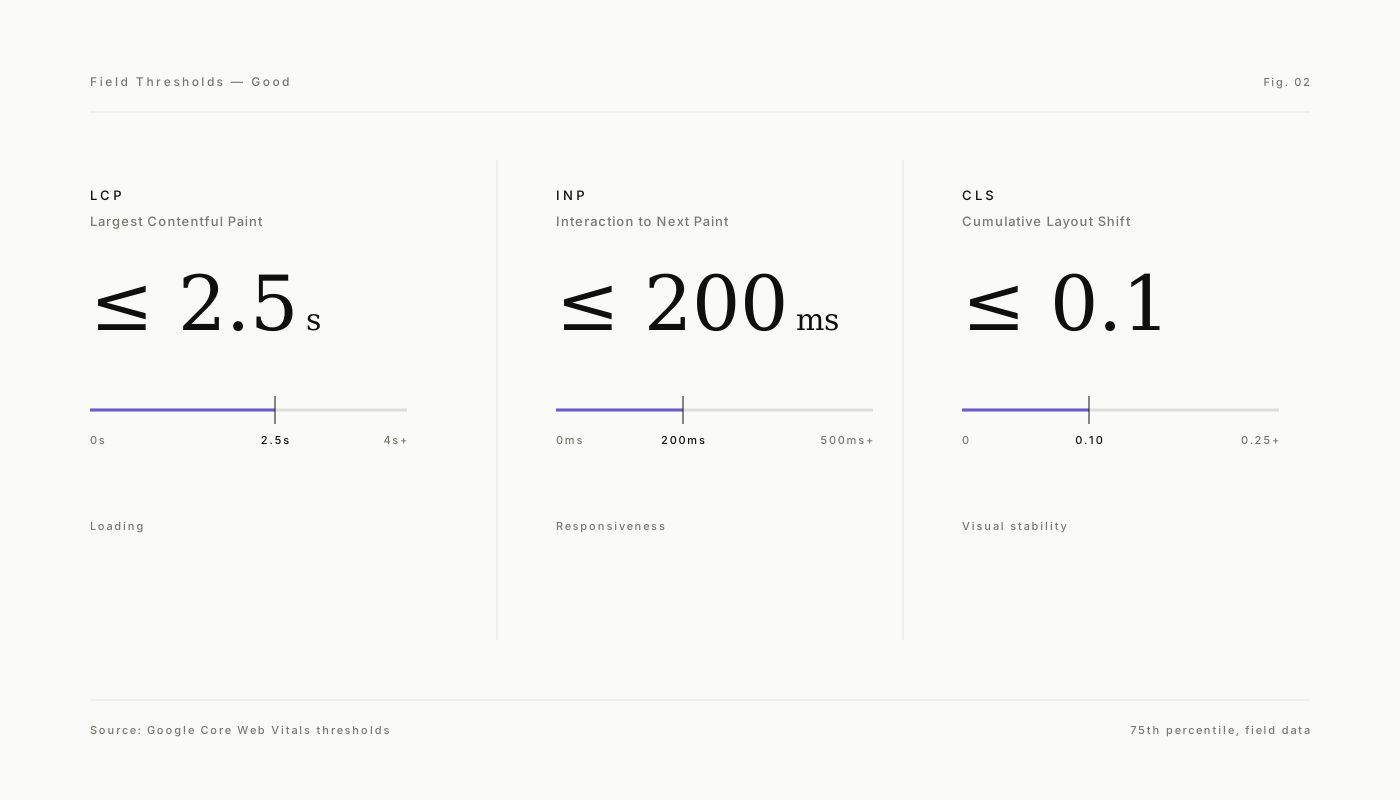
Google's official Core Web Vitals thresholds provide a concrete target. Largest Contentful Paint should be 2.5 seconds or less, Interaction to Next Paint should be 200 milliseconds or less, and Cumulative Layout Shift should be 0.1 or less (Google Search Central). Shopify and BigCommerce implementations can meet or miss those thresholds depending on how the storefront is built.
A headless build can improve control over rendering and interaction work, but it also introduces another frontend that the merchant must operate. A conventional theme can be fast when its templates, scripts, images, and app dependencies are disciplined. Conversely, a technically fashionable architecture can perform poorly if teams ship excessive client-side JavaScript.
Search evaluation also requires the right measurement method. Google states that Core Web Vitals assessments rely on the 75th percentile of field data across page views when enough real-user data exists, rather than a single lab test or one page measurement (web.dev thresholds methodology, Google Search Central). A migration plan should therefore establish real-user monitoring before launch and continue it after release.
Ecosystem, Integrations, and App Bloat Risk
Shopify's ecosystem is materially broader. Its official comparison lists 2,380 apps and partners versus 1,237 for BigCommerce as of April 24, 2024 (Shopify comparison). That gap can reduce solution-search time and expand hiring options, especially for DTC teams that need specialized merchandising, retention, subscriptions, reviews, analytics, or customer-service workflows.
Partner count is not an enterprise architecture metric by itself. A large marketplace can accelerate delivery, but every app adds vendor dependency, data ownership questions, release risk, and potential storefront code. A smaller ecosystem can force more custom work, yet BigCommerce's broader native feature orientation may produce a leaner stack for certain B2B merchants.
Integration selection should begin with business ownership, not app-store browsing:
-
ERP contract: Define which system owns products, inventory, customers, prices, orders, tax, and fulfillment status.
-
Event reliability: Specify retries, duplicate handling, reconciliation, and alert ownership before implementation.
-
Storefront impact: Require every app or extension to document its JavaScript, data collection, and performance cost.
-
Exit path: Record how data will be exported if the service is replaced later.
BigCommerce often appeals to teams that prefer more capability inside the platform and more direct API control. Shopify Plus appeals to teams that value a broad partner market and a managed commerce boundary. Neither removes integration governance. A native feature still needs configuration, testing, and ownership, while an app still needs security review and lifecycle management.
The hiring question matters too, but it should be evaluated locally and by skill category. A merchant with an existing Shopify team may carry less implementation risk than a merchant that must build new BigCommerce expertise, even when BigCommerce is technically attractive. The reverse can be true for an organization with deep experience operating open storefronts and custom checkout code.
Replatforming Checklist for Established Brands
A replatform is a systems integration project, not a theme switch. The team should freeze the scope of critical behavior before designers begin rebuilding templates. For established brands, the failure pattern is usually not that the new storefront looks wrong. It is that data contracts, checkout behavior, redirects, taxes, fulfillment logic, or account rules were never documented precisely enough to reproduce in the target platform.
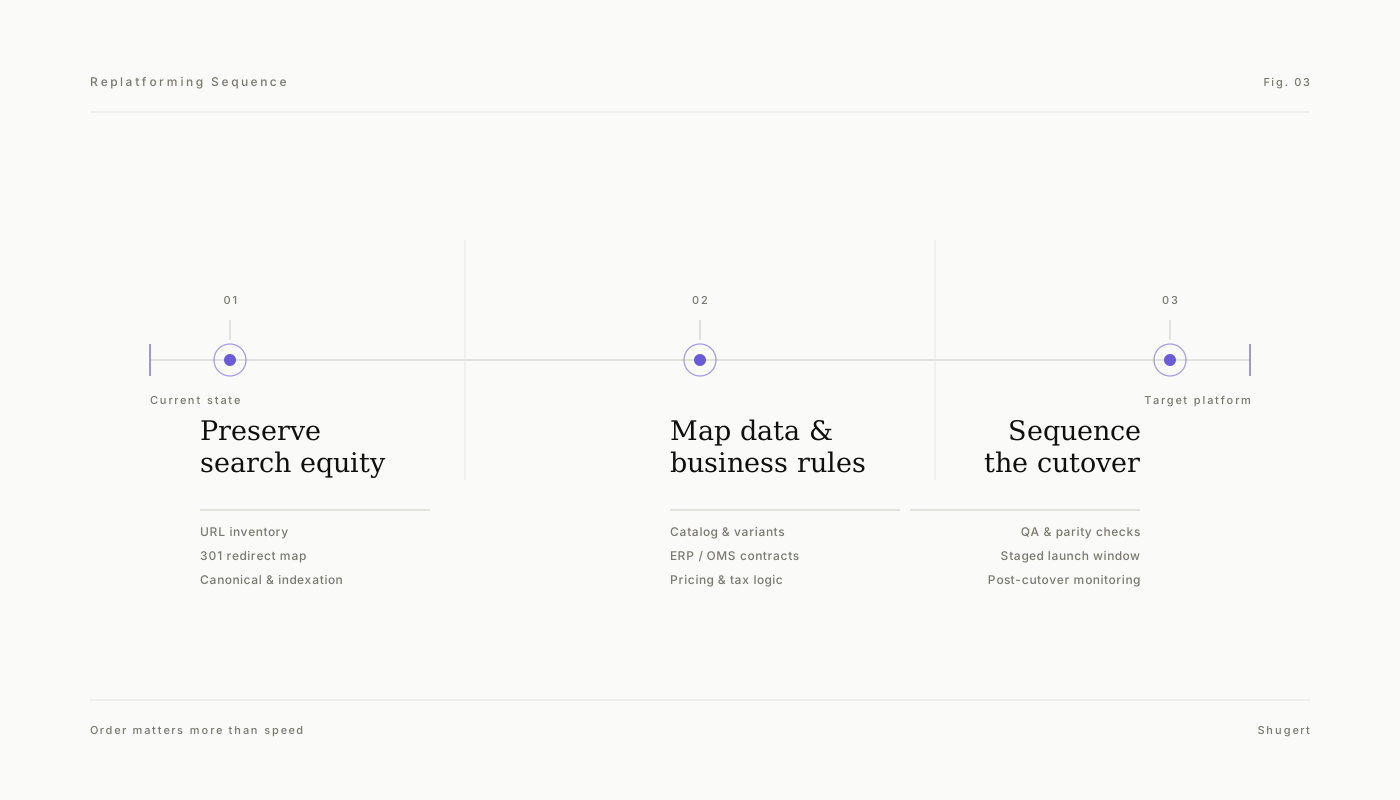
Preserve search equity before changing templates
Start with a URL inventory and a redirect map. Every changed product, collection, content, account, and campaign path needs an intentional destination. Use permanent redirects for permanent moves, preserve canonical and hreflang behavior where applicable, and validate structured-data parity before launch.
The launch plan should also account for crawler behavior, sitemap submission, index coverage, and monitoring. A visual staging review will not expose a missing canonical, an orphaned collection, or a redirect chain. Teams should validate templates, faceted navigation rules, robots directives, canonicals, structured data, internal links, XML sitemaps, and market or storefront URL logic before DNS cutover.
Map data and business rules explicitly
The migration specification should include:
-
Products and variants: Map titles, descriptions, media, options, SKUs, barcodes, inventory, metafields or custom fields, and relationships. For teams centralizing complex product data before migration, a structured approach to product information management can reduce field mismatches and catalog-governance issues.
-
Customers and orders: Define customer identifiers, historical order status translation, account access, tax-exemption handling, and privacy requirements.
-
Commercial rules: Rebuild price lists, customer groups, discounts, tax registrations, shipping zones, payment terms, and approval logic.
-
Subscriptions and stored value: Validate subscription contracts, gift card balances, renewal behavior, and customer consent.
-
Integrations: Document ERP, warehouse, 3PL, tax, payment, analytics, and fulfillment webhook contracts.
-
Checkout behavior: Replace legacy scripts with supported extension or integration patterns where required.
-
Search and merchandising rules: Recreate collection logic, on-site search behavior, redirects, filters, and promotional logic.
-
Operational ownership: Name the team responsible for post-launch support, issue triage, release testing, and rollback decisions.
The BigCommerce to Shopify migration guide provides a practical reference for organizing those workstreams. The same discipline applies when the direction is reversed. BigCommerce may simplify a checkout or B2B requirement, but the team still needs to preserve URLs, customer data, integrations, analytics continuity, and operating procedures. Teams evaluating Shopify migrations should also connect platform choice to implementation ownership, commercial requirements, and support expectations, not just data import mechanics.
Sequence the cutover
Load representative staging data, run full order and refund tests, validate inventory synchronization, and have business users approve catalog and B2B scenarios. Adjust DNS TTL ahead of launch, submit the new sitemap through search tooling, and monitor crawl errors, index coverage, order flow, and conversion behavior during the 30-day post-launch window.
High-risk programs should also include parallel-run checks for orders, taxes, inventory, and customer account flows before final cutover. If the merchant uses multiple storefronts, markets, warehouses, or B2B price lists, test those paths with production-like data rather than sample records. A migration runbook should define launch roles, rollback criteria, log sources, escalation paths, and who approves checkout, payments, and ERP synchronization at go-live.
Migration rule: If a requirement cannot be demonstrated in a signed-off test scenario, it is not ready for cutover.
Which Platform Fits Which Merchant
Shopify Plus fits an established DTC brand when the operating model depends on marketing velocity, ecosystem depth, standardized checkout extensibility, and broad hiring supply. It is the practical choice for teams that want Checkout Extensibility and Functions instead of maintaining unrestricted checkout scripts, and for international operations that benefit from centralized market management.
That recommendation reflects ecosystem scale, but scale is not a substitute for fit. Shopify Plus usually offers a wider pool of agencies, developers, apps, and implementation patterns. The operating model still decides whether that breadth reduces risk or adds unnecessary complexity.
BigCommerce deserves a direct recommendation in several situations:
-
Open checkout requirements: A technical organization that must retain deeper checkout control may prefer Open Checkout over Shopify's managed extension model.
-
Payment-provider constraints: A business in a market without Shopify Payments may value BigCommerce's gateway flexibility and transaction-fee economics.
-
B2B operating depth: Quote workflows, customer-specific pricing, account structures, and ERP-driven commerce may be easier when more requirements are native.
-
Multi-storefront operating models: Separate regional catalogs, teams, or workflows may align well with BigCommerce's Multi-Storefront architecture.
-
Margin sensitivity: High transaction volume makes payment and platform-fee modeling more important than app-marketplace breadth.
These are operating-model decisions, not feature checklist wins. BigCommerce can be the better choice for high-transaction-volume B2B businesses, markets without Shopify Payments, and organizations that need deeper control over checkout or storefront architecture. Shopify Plus is usually stronger when DTC teams prioritize rapid merchandising, a managed checkout model, and access to a large implementation ecosystem.
A third profile should consider replatforming from either platform. The case is strongest when the current system has become difficult to govern, integrations fail without clear alerts, catalog rules no longer match the operating model, or the team spends more time maintaining workarounds than improving commerce. Moving from BigCommerce to Shopify Plus is not automatically progress. Remaining on Shopify Plus is not automatically prudent.
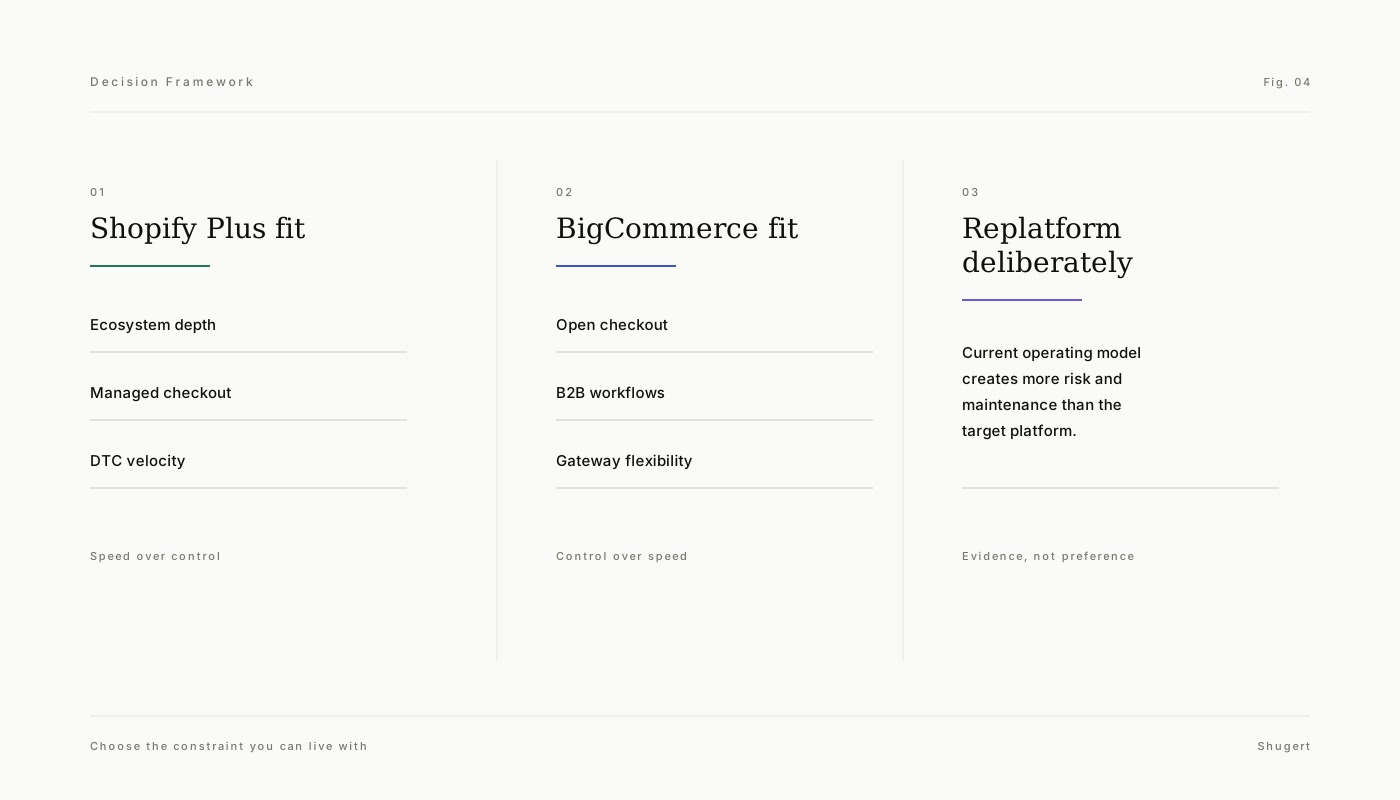
Use this decision framework:
-
Choose Shopify Plus when ecosystem depth, DTC execution, managed checkout extensibility, international operations, and merchant usability lead the priorities.
-
Choose BigCommerce when gateway flexibility, native B2B workflows, transaction economics, regional storefront separation, or open checkout control are required.
-
Replatform deliberately when the current operating model creates more implementation and maintenance risk than either target platform would introduce.
The winner in Shopify Plus vs BigCommerce is not determined by the longest feature list. Choose the platform that lets the merchant's team operate, integrate, govern, and evolve without creating unmanageable risk.
Shugert helps established DTC and B2B brands evaluate and execute complex Shopify migrations, including platform architecture, data mapping, Checkout Extensibility, Shopify Functions, integrations, performance, and technical SEO. Visit Shugert's Shopify Plus agency page to discuss the platform decision and build a migration plan around the merchant's actual operating model.
Keep exploring this topic
Deeper references from the Shugert library and the service that turns this work into a fixed scope.
Related resources
- BigCommerceBigCommerce to Shopify Migration Guide (Real-World)After 30+ migrations since 2016, here is the honest breakdown of what actually changes when you move a BigCommerce store to Shopify, and where merchants get…
- Shopify PlusShopify Plus Migration: Cost, Timeline & ProcessPlan a Shopify Plus migration with realistic costs, timelines, SEO safeguards, checkout, integrations, testing, cutover and stabilization.
- Shopify PlusShopify Functions Explained: What They Do for Your StoreA technical explainer on Shopify Functions, the Wasm runtime, supported languages (Rust, JS, TS), the seven Function types, and how the architecture…
Related services
Keep reading

What We Learned Migrating 8,000 SKUs to Shopify
Large-catalog Shopify migrations expose problems that small stores can hide: redirect mapping, product modeling, crawl control, QA, and cutover sequencing.